
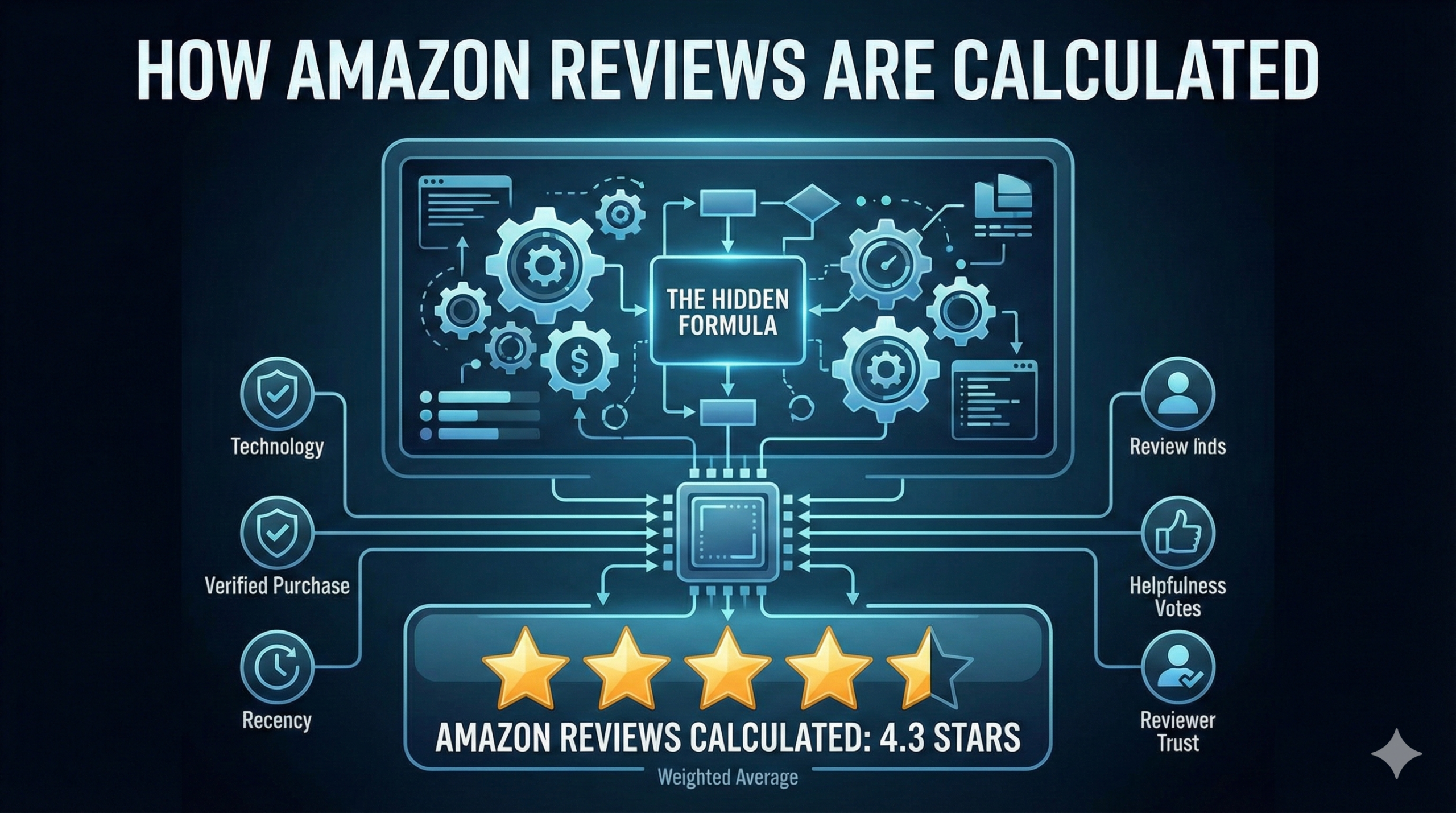
Ratings given by customers helps get a quick data analysis on whether a product should be purchased or ignored. The rating systems on Amazon gives an average opinion of star ratings. But in order to for Amazon reviews to be fair for the company and to users, a more complex system is needed. This makes the ratings more accurate to what the product is worth. Buyers do need to keep in mind Amazon reviews and how they can be beneficial for customers, especially the sellers.
Why Amazon Reviews Matter More Than You Think
Without a doubt the biggest online marketplace in the world today is Amazon. The platform sells millions of different items spanning an incredible number of categories. Given this vast selection of items, customer feedback is an essential part of the shopping experience. Reviews of a product serve as a social proof that can help tip the customer over the edge in regard to a purchasing decision. Items with higher star ratings generally sell better because they become more visible, which in turn makes the product and selling company more reputable.
Nevertheless, Amazon does not simply want to show positive feedback; they want to show accurate feedback. This is why the review system is not simply an average.
Is the Star Rating Just an Average?
Some people think that star ratings on Amazon simply come from averaging the reviews left. This may have been the case back in the day, but not anymore. Amazon now considers a number of different factors to come up with a final star rating on a product.
This system allows the most recent reviews that hold weight `to hold more power than older reviews of the product.
Key Factors Amazon Uses to Calculate Reviews
1. Recency of Reviews
The reviews about a product should be recent because things can change within a company. Perhaps they have done a manufacturing update, or, even more likely, a change in quality. But to make sure the star rating of the review relates to current customer service, Amazon should prioritize recent reviews.
2. Verified Purchase Status
Reviews from customers who bought the product on Amazon are considered more legitimate. Verified purchase reviews help prevent fake or incentivized reviews from affecting the overall rating.
3. Review Helpfulness
Reviews can be voted on by other users, and votes are part of the system to determine review helpfulness. Reviews that are voted on more and are considered to be of greater help to other customers are more influential in the system.
4. Reviewer Trustworthiness
The credibility of reviews can be determined on a system-wide basis, and Amazon can adjust the weight of a review to be either positive or negative.
5. Review Content and Context
Reviews that provide content and will be considered more and help customers more. Helpful reviews are more preferred on Amazon, so that will have some positive weight on the system.
How Fake Reviews Are Filtered Out
Fake and manipulated reviews are some of the biggest challenges facing Amazon. Trusting Amazon’s review system becomes increasingly more difficult. To mitigate this issue, Amazon uses a combination of machine learning and manual moderation to detect and remove the following suspicious activity:
Sudden increase of positive reviews
Multiple reviews from the same account
Incentivized feedback
Repetitive phrases among the reviews
If Amazon identifies this activity on an account or review, the account can be completely suspended and the reviews removed. Thus, Amazon ensures the reviews that are displayed are a trustworthy representation of the product.
Why You See Different Ratings Over Time
Suppose you’re paying attention to a product’s star rating and notice that it has changed without many new reviews coming in. The probable reason. That is, Amazon recalculates weights. As more reviews are added, older reviews lose their influence. And, if some reviews get moderated and removed, the overall rating can change.
This flexible and adaptable algorithm is designed to keep ratings in line with the overall review count. But it’s also risky if a seller only expects ratings to change in correlation with the addition of new reviews. This could lead to confusion regarding the rating.
Star Ratings vs. Customer Perception
As much as star ratings can impress shoppers, many reviews still read written feedback before deciding on their purchases. Between products that have lower (but detailed, positive) star ratings and products that have higher (but vague) star ratings, shoppers are more inclined to purchase the former. This case emphasizes that written feedback is just as important as star ratings.
For example, a single well-written amazon product review clarifying what real-world usage looks like can impact buying decisions more significantly ash than many shorter reviews saying “good product.
The Role of Ratings and Reviews in Product Visibility
Even Amazon’s search and recommendation structures take customer feedback into account. If products receive feedback consistently and of high quality, they are more likely to be shown at the top of search results and receive more recommendations. This means that reviews sway not just buyers, but also the discoverability and sales of products.
With the ratings and reviews in combination, Amazon is able to showcase products that actually contribute value to a customer’s purchase, and this improves the overall experience at Amazon.
What This Means for Buyers
Absorption of shopper review metrics should result in better decision making from customers
Rather than overall ratings, look at star ratings from recent reviews
Prioritize reviews from verified purchases
Look for reviews containing detailed information as they are more accurate in portraying the pros and cons of the product
This helps customers make wise decisions. Feedback multiplication leads customers to negative decisions. Do not make a buying decision based on feedback from reviews that are old and irrelevant.
What This Means for Sellers
For sellers the takeaway is simple: sellers should prioritize the quality of the products they sell and the authenticity of the customers’ experiences. Genuine and honest feedback from customers, the resolution of concerns, and the uniformity of customers’ products will lead to the gradual improvement of the customer experience. Building a reliable and trustworthy customer base should be the priority over gaining short term victories. The result will be a refined and developed reputation of the brand.
Final Thoughts
Amazon focuses on fairness, trust, and relevancy in their systems. Star ratings are not just random, they are carefully calculated off recent, useful, and verified feedback. Knowing how Amazon calculates and weighs feedback, both buyers and sellers can utilize Amazon more effectively and make better choices in highly competitive marketplaces.